Water and Electricity Don’t Mix
School is out and summer has officially begun. A large part of our membership lives on the water. PC Electric wants to remind its members of a serious hazard that often remains overlooked. This silent killer is known as Electrical Shock Drowning (ESD). This typically occurs in fresh water when a low-level alternating current (AC) passes through the body and causes muscular paralysis that can eventually lead to drowning.
Many ESD deaths have occurred around private docks and boats plugged into shore power while docked. It only takes between 10 and 15 milliamps, which is 1/50 of the wattage of a 60-watt light bulb, to cause drowning. Old or outdated wiring and a lack of appropriate safety equipment, and maintenance on docks or boats is the leading cause of ESD.
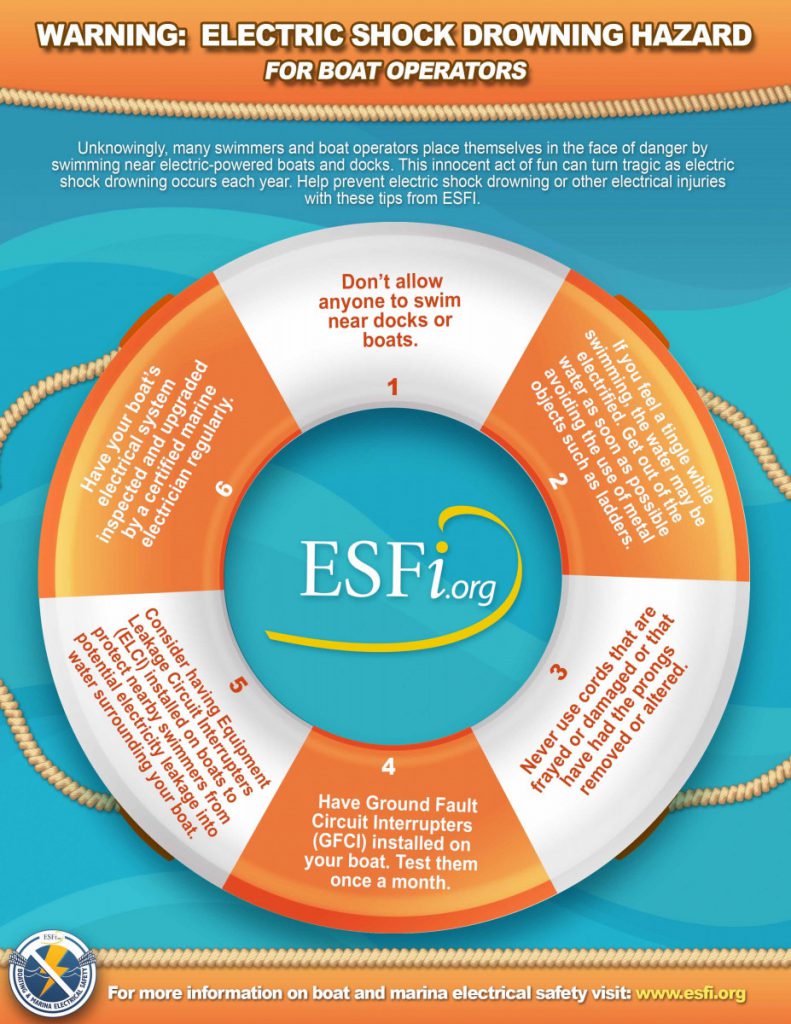
Protect yourself and your loved ones from the risk of ESD and common boat electrical hazards with these handy tips from the Electrical Safety Foundation International (ESFI).
Don’t allow yourself or anyone else to swim near docks. Avoid entering the water when launching or loading your boat.
If you feel a tingle while swimming, the water may be electrified. Get out as soon as possible avoiding the use of metal objects such as ladders.
Always maintain a distance of at least 10 feet between your boat and nearby power lines.
Have your boat’s electrical system inspected and upgraded by a certified marine electrician who is familiar with National Fire Protection Association Codes: NFPA 303 and NFPA 70.
Have Ground Fault Circuit Interrupters (GFCIs) installed on your boat, and test them once a month.
Consider having Equipment Leakage Circuit Interrupters (ELCI) installed on boats to protect nearby swimmers from potential electricity leakage into the water surrounding your boat.
Only use shore or marine power cords, plugs, receptacles, and extension cords that have been tested by Underwriters Laboratories (UL), Canadian Standards Association (CSA) or Intertek (ETL).
Never use cords that are frayed or damaged or that have had the prongs removed or altered.
Never stand or swim in water when turning off electrical devices or switches.
ESD can also occur in swimming pools, hot tubs, and spas. Have an electrician inspect and upgrade your pool, spa, or hot tub in accordance with applicable local codes and the National Electrical Code (NEC).
If you see someone in the water and suspect they are getting shocked, you should not jump in to save them. Instead, throw them a float, turn off the power connection at the source, and/or unplug shore power cords. Try to turn off the source of electricity as quickly as possible; then call 911.
PC Electric is providing you with this full-page graphic that you can easily print and post at or near docks, boats or even camp sites to remind everyone to stay safe while enjoying our waterways this summer.